Planning for Impact in Uncertain Times: West Valley Community Services charts its future through collaboration.
This is a complicated time to lead a social service nonprofit. Communities across Silicon Valley are struggling with the rising cost of living, while the systems many families depend on for support are under increasing financial and political pressure. In areas often seen as affluent, those challenges can be even harder to recognize. The assumption that wealth is evenly distributed can obscure the reality that many residents live one emergency away from crisis. For organizations working in these communities, the challenge is not only to meet urgent needs but also to help others understand that those needs exist.
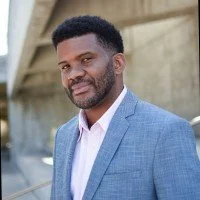
Few people understand this better than Sujatha Venkatraman, Executive Director of West Valley Community Services, a Cupertino-based nonprofit that serves low-income and unhoused residents across Cupertino, Saratoga, West San Jose, Los Gatos, Monte Sereno, and nearby mountain communities.
“It’s always surprising to people,” Venkatraman said. “In such an affluent area, they don’t expect to hear that we are serving thousands of individuals every year. When I first started, I had to convince some local leaders that residents in their communities needed services. They simply didn’t believe it.”
Founded in 1973, West Valley Community Services has spent more than five decades providing essential support to people facing economic hardship. Today, the organization offers a wide range of programs, including a community food market, a mobile Park-It Market, supportive services for unhoused residents, emergency financial assistance, case management, resource navigation, and seasonal programs such as back-to-school supplies and holiday assistance.
As needs in the region continued to grow and change, the organization recognized the importance of stepping back to reflect on its long-term direction. To guide that work, West Valley Community Services partnered with ALF Insights to refresh its strategic plan. The goal was to create a clear path forward while strengthening the organization’s ability to respond to both immediate needs and long-term challenges.
The updated plan focuses on building a network of accessible service hubs and mobile units across the region that can provide food, financial assistance, and case management. It also establishes a clearer Theory of Change to guide decision-making and calls for the creation of Lived Experience Advisory Councils to help community members shape advocacy, policy, and program development.
The timing of the strategic planning process was influenced by a leadership transition at West Valley Community Services. The organization had planned to update its strategic plan in 2023, but the effort was paused when the former Executive Director left, and Sujatha Venkatraman stepped in as interim leader. Rather than rushing the process, the board agreed to allow time for the organization to stabilize so the planning could be thoughtful, inclusive, and grounded in the experience of staff and stakeholders.
Throughout 2024, the organization focused on strengthening internal systems and stabilizing operations. Once that work was underway, Venkatraman approached the board about beginning the strategic planning process. From the start, she knew she wanted an approach that felt collaborative rather than rigid.
“Some consultants came in with a very scripted approach,” she said. “This is how we do it, this is the timeline, this is the output. The proposal from ALF Insights felt different. It was open-ended and collaborative. It felt like the facilitator would guide the process and hold us accountable, but the ideas and direction would come from us.”
The process began with a community needs assessment designed to gather input from a wide range of stakeholders. Board members, staff, community partners, and people who have received services from the organization were all invited to share their perspectives. This discovery phase helped identify both the organization’s strengths and the challenges facing the communities it serves.
The next step was to form steering committees and task forces to guide the work. With support from ALF Insights facilitator Jenny Niklaus, the process was structured in phases so that participation could be broad without becoming overwhelming.
“We started with data gathering and discovery,” Venkatraman said. “Then we moved into steering committee and task force work. That structure made it easier for people to contribute in ways that fit their roles.”
A large stakeholder group was formed, including community partners, people with lived experience, members of the executive team, and other leaders who could speak candidly about the organization’s strengths and areas for growth. From that group, a smaller steering committee was created to help shape the final plan.
“The steering committee included past volunteers, past board members, current board members, lived experience leaders, and key staff members,” she said. “Not everyone stayed involved in every step, but everyone’s input was captured.”
Through these conversations, several themes began to emerge. Stakeholders consistently described West Valley Community Services as a trusted organization with a strong reputation and a solid financial foundation. At the same time, they emphasized that the need for services continues to grow and that the organization plays a critical role in the local social safety net. With that understanding, the focus shifted from the present to the future. The steering committee worked to identify priorities that would guide the organization in the years ahead.
Key areas of focus included developing a sustainable revenue and marketing strategy, strengthening physical infrastructure to support future growth, expanding mobile food delivery programs, and investing in staff development and human resources.
One of the challenges in any strategic planning process is ensuring the work feels relevant to staff focused on day-to-day operations. Venkatraman said the approach used in this process helped keep the conversations grounded.
“Not everyone was involved in every step, and that was important,” she said. “Some of our frontline staff are focused on serving clients every day. If you suddenly invite them into a formal planning meeting, it can feel intimidating.”
Instead, discussions were framed around practical questions connected to their daily work.
“Jenny asked simple but powerful questions,” Venkatraman said. “What challenges are you seeing? What opportunities do you see? Where would you like the organization to be in a few years? Those conversations felt comfortable because they were based on real experience.”
That approach helped staff see how their work connects to the organization's larger vision.
Despite the depth of the process, the strategic plan was completed in about nine months. For Venkatraman, that timeline was important.
“We operate in a space where crises are happening every day,” she said. “We are addressing housing instability, food insecurity, and poverty in real time. If you spend two years writing a strategic plan, the reality on the ground may already have changed.”
With the new plan in place, Venkatraman feels confident the organization has a clear framework for growth while still allowing room to adapt as conditions change. Looking back, Venkatraman says the most meaningful part of the experience was the collaborative spirit that guided the work.
“What stood out to me is that the process was built on shared power,” she said. “ALF Insights was not there to tell us what to do. She helped us discover our own path.”